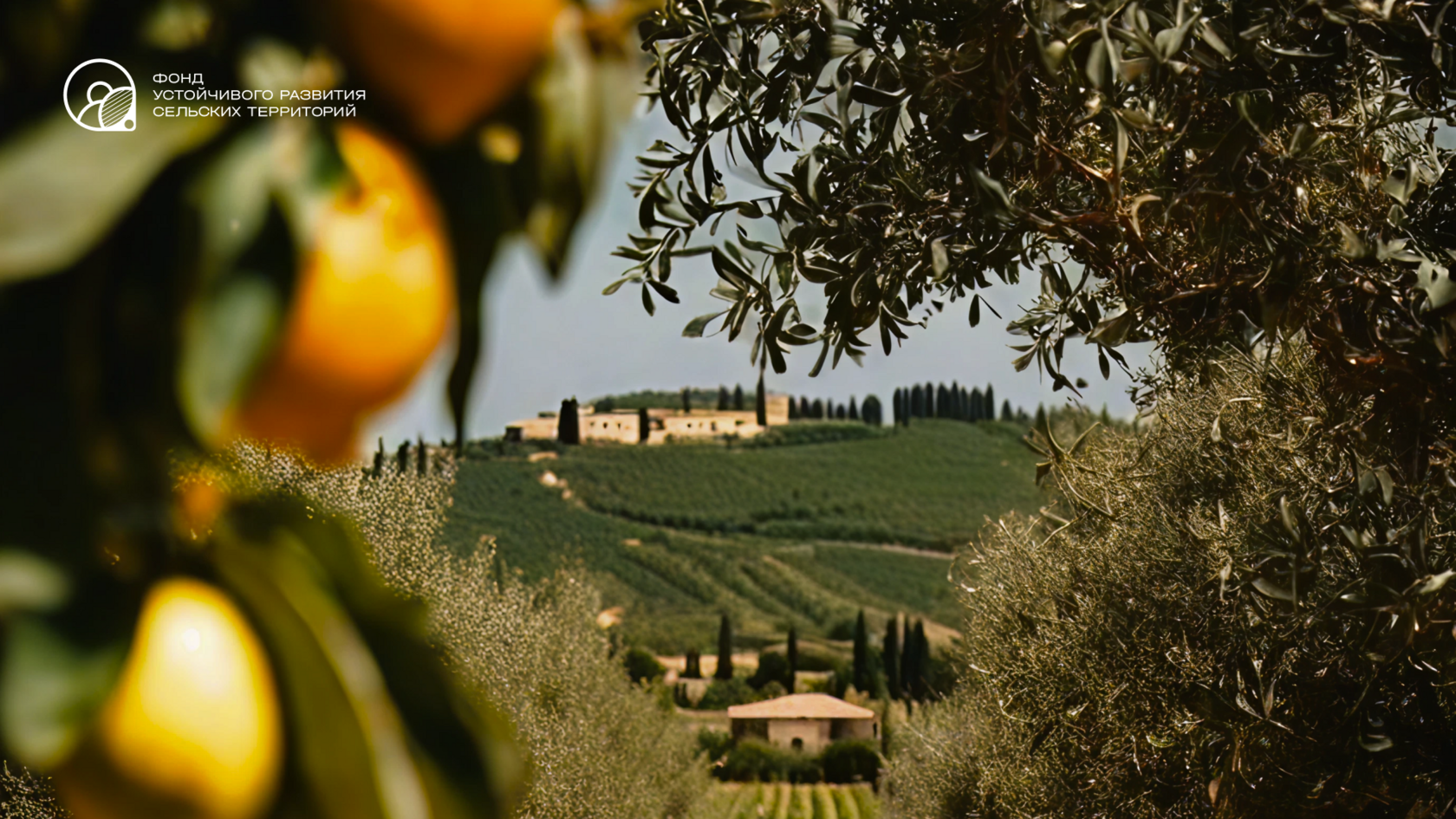
For decades, rural Italy was losing its youth: in 70 years the population of remote settlements fell by roughly a quarter. The government’s response was a combination of measures: grants for startups, long-term credit for young farmers, and billion-euro investments in borghi – historic villages. For Kazakhstan, where 37% of the population lives in rural areas, this experience is highly instructive.
From History to Statistics
After World War II, Italy’s provinces began to lose population at a rapid pace. Young people abandoned the aree interne – remote rural areas – in search of opportunities in major economic centers [1]. As a result, today more than half of Italians live in large cities [2], while many mountain and rural communes have turned into “ghost villages,” inhabited mostly by the elderly. Between 1951 and 2019 the population of remote settlements fell by 26%, while major cities grew by 30–50% [3]. Even in the past decade, despite overall stabilization of Italy’s population, the most isolated corners kept losing residents [4].
The South bore the heaviest blow. In the Mezzogiorno, weak labor markets pushed young people away: in recent years nearly 330,000 specialists left the internal areas, while only 198,000 returned. Declining birth rates compounded the demographic fall and erosion of human capital.
The Place-Based Approach
Recognizing the scale of the problem, in 2013 the Italian government launched the National Strategy for Inner Areas (SNAI) – a targeted, place-based program to revive struggling zones [5]. The team of Fabrizio Barca conducted an “X-ray” of the country, mapping access to essential services and establishing a simple criterion: if it takes more than 20 minutes to reach a hospital, a school, or a railway station, the area qualifies as aree interne. These territories cover about 60% of Italy’s land and over half of its municipalities, yet house only about 22% of the population. It was to these areas that efforts were directed.
Between 2014 and 2020, 72 pilot zones were selected (encompassing over 1,000 communes and around 2 million residents), and for each a package was assembled: transport and connectivity, healthcare and education, business support. The condition was bottom-up: mayors joined forces, worked with local residents to set priorities, and were responsible for implementation. By 2020, over €1.1 billion from national and European funds had been directed to strategies in 71 pilot zones. The logic was twofold: upgrade essential services to urban standards and jump-start the local economy.
“Staying in the South”: Betting on Young Entrepreneurs
Infrastructure alone cannot keep young people – jobs are essential. In 2017 the Italian government launched the program Resto al Sud (“Staying in the South”), aimed at combating brain drain from the poorest regions [6]. The program was allocated €1.25 billion and initially covered eight southern regions (Abruzzo, Apulia, Basilicata, Calabria, Campania, Molise, Sardinia, Sicily), with access open to applicants up to 35 years of age. Later, coverage was extended to certain earthquake-affected communes and the age limit raised – first to 46, and since 2021, to 55.
The terms were generous: for project launch, €50,000–200,000 per project (depending on number of founders), of which 50% was a grant and 50% a concessional loan backed by government guarantees. Interest payments were covered by Invitalia, which also operates a network of information centers in the South. At the start, fewer than 40% of applications were approved – many were raw or non-compliant, and the widespread “fear of failure” (around 60% among youth, according to OECD [7]) played its part. After adjustments, the program gained momentum: freelancers were allowed, and businesses could relocate from large cities to rural areas.
The result: by August 2023, 16,286 projects had been financed and over 57,000 jobs created; by 2025, the figures reached nearly 19,000 new enterprises and 63,000 jobs. The most active regions were Campania and Sicily, with projects ranging from small hotels and bakeries to agritourism and IT services. Judging by the numbers, yesterday’s job seekers increasingly chose entrepreneurship at home.
A Second Life for Italian Villages
Another initiative launched in recent years has focused not so much on individual entrepreneurs, but on territories as a whole – especially the smallest and most historically valuable ones. In 2021, when Italy received EU Next Generation crisis-fund financing, part of the money was earmarked for the revival of borghi — old villages. Thus was born the program Attrattività dei Borghi (“Village Attractiveness”), with €1 billion allocated through the National Recovery and Resilience Plan (PNRR) [8]. The project is overseen by the Ministry of Culture, since the emphasis is on cultural and tourism revitalization of semi-abandoned settlements.
The program is divided into two tracks. “Line A” targets 21 pilot borghi (one per region) on the verge of extinction. Each received about €20 million for comprehensive restoration and development: rescuing historic buildings, creating museums and cultural spaces, attracting tourism, launching creative industries. “Line B” supports hundreds of more typical villages: 229 projects were selected through competition, sharing a total of €580 million. Here the budgets are smaller but the reach broader: funds go to landscaping, school and square renovations, community events, and promotion of local products. Italian authorities openly declare that they see small towns as pillars of sustainable tourism: instead of crowds in Venice and Rome, the tourists of the future will travel to taste cheese in a mountain hamlet or stroll through authentic alleyways. But first these villages must be saved from extinction.
Notably, alongside infrastructure and culture, Attrattività dei Borghi includes direct support for rural entrepreneurship. In 2023 the Imprese Borghi program was launched with a €200 million fund for subsidies to small businesses in villages. By mid-2024, according to official data, nearly 2,800 new business initiatives in borghi had received funding totaling €189 million. These are very small ventures — from family crafts to social startups — but in a village even 5–10 new jobs can make a real difference.
A New Wave of Farmers
Equally significant are measures to draw young people into agriculture — a sector where the average age of farm owners in Italy has surpassed 60. To encourage generational renewal on the land, in 2022–2023 the state fund ISMEA (Institute of Services for the Agricultural Market) launched the initiative Generazione Terra (“Generation Earth”) [9]. In essence, these are concessional mortgages for young farmers: those under 41 can obtain loans of up to 30 years for purchasing farmland worth up to €1.5 million. Moreover, if a new farming company is created, the state provides an additional €70,000 bonus — effectively a grant, which can be used for initial loan payments.
For completely inexperienced youth under 35, smaller loans are available (up to €500,000) — including for agricultural education and farm registration. The total program budget is about €100 million. The goal is to give a new wave of farmers a chance to enter the business without crushing upfront capital requirements. In addition, the government has put 800 plots of state-owned land up for sale specifically for youth projects, complementing the “land offer.” It is too early to assess the results of Generazione Terra — applications have only just begun — but interest is high, especially in central and southern regions where abandoned fields and empty farms abound.
First Results
Italy is testing various instruments, and partial success is evident. SNAI, for example, secured resources for villages that were previously remembered only during elections. In some regions transport links really improved: in Piedmont’s Val Maira Valley, a public carpooling service was launched — a rural ridesharing system taking residents to the city on schedule [10]. In Liguria’s mountain villages remote classrooms appeared — children study via video if the nearest school is an hour away. In Molise, small pharmacies became “smart pharmacies” with telemedicine, allowing residents to run tests and receive doctor consultations remotely. And in Sicily’s Madonie region, landslide-monitoring systems were installed to safeguard settlements.
All these pilot projects are part of the strategy to “revive” inner Italy. According to OECD, SNAI has become an interesting example of multi-level governance: it linked investments from different ministries and funds, uniting state and grassroots efforts.
Critics, however, point to weak results. SNAI has been implemented for nearly ten years, yet the demographic decline has not stopped — in many villages the population continues to shrink [11]. According to the Italian Senate, the impact of the strategy remains modest despite hundreds of millions spent. Reports frankly admit that the implementation process was too slow and bureaucratic, especially in the South, where local administrations lacked staff and skills to manage funds. Programs like Resto al Sud are not a cure-all either: they create new firms but do not resolve the deeper problem of weak demand and depressed economies. Not all startups will survive long-term — some entrepreneurs may close shop after the support period ends if customers cannot be found.
Participants themselves evaluate the initiatives differently. Many young entrepreneurs sincerely thank the state for the opportunity: “Without this grant I would have gone to Rome to work as a waiter, but instead I opened my own bakery in my hometown” — such testimonials are common in southern regional media. On the other hand, some express disappointment. In certain borghi residents complain that PNRR funds went into “cosmetics” — the town square repainted, but no jobs created. Experts from Naples-based Svimez argue that without serious improvements in schools, hospitals, and internet access, all these one-off projects will not change the trend. The gap with cities in comfort and services remains too large.
And yet, positive shifts are visible. Youth outflow curves have started to flatten in places where new opportunities emerged. Where coworking spaces, wine bars, or agritourism have appeared, people have begun to return as well. Even the phenomenon of “South Working” — remote work from the South — has gained momentum: after the pandemic, some Italians chose not to return to Milan offices, but to work remotely from their home provinces, taking advantage of improved internet. Riding this enthusiasm, the Italian government announced its intention to make the inner-area strategy a permanent state policy rather than a one-off experiment. In the EU budget for 2021–2027, new tranches have been earmarked for rural development, and the national plan provides for streamlined procedures to ensure funds arrive faster.
Lessons for Kazakhstan
Italy’s case shows clearly: rural revival cannot be achieved with a single tool. A road without jobs will not retain people, nor will a grant without services. Where infrastructure, employment, and quality of daily life converge into one package, the effect endures; scattered actions create noise for a quarter and silence for years. That is why Italy first mapped the “zones of decline,” granted them special status, and began to concentrate resources in a targeted, place-based way: modernizing hospitals and schools, subsidizing business, promoting villages as places for life and tourism.
A separate line of effort concerns young farmers: long-term loans for land and equipment plus mentoring – a sort of career pathway into agribusiness. For Kazakhstan this is especially relevant given a troubling backdrop: the agricultural sector is aging, and shortages of agronomists and veterinarians will not resolve on their own. Unless an “entry point” is opened for 20–35-year-olds, no machinery will run.
Finally, the main lesson is integration and a clear vision of the rural future. Young people weigh not only wages, but the environment: fast internet, reliable healthcare, strong schools, opportunities for leisure, and quality public spaces. What is needed is not a set of disparate facilities, but a coherent picture of place and the discipline to implement it. Italy invested precisely where “everyday life” makes staying a rational decision, not just an act of heroism. Kazakhstan requires a comparable approach.
For example, Kazakhstan’s Rural Sustainable Development Fund works in this logic: beginning with a vision and diagnosis of the district, it develops a long-term sustainability strategy, studies socio-economic activity, and identifies strengths and barriers. The strategy rests on three pillars — economy, social environment, and ecology — and is built on two principles: decisions are made jointly by business, government, and community (projects are not “imposed” from outside), and planning is conducted “from the future”: envisioning what the district should look like decades from now, and then aligning budgets and actions to that vision.
Such an approach shifts the conversation from “we built it and reported” to questions of meaning: how people will earn a living, what daily life looks like, and why young families would reasonably choose to stay.
Conclusion. The Italian experience confirms: results come not from the sum of facilities, but from an integrated strategy, persistent implementation, and measurable outcomes. Kazakhstan would do well to build on this principle of assembly when designing the future of its rural territories. After all, the goals – sustainable development, preservation of cultural heritage, and fair regional progress – are shared by Italy and Kazakhstan; what differs are the tools and the pace.
Sources
- Wikipedia (EN). National Strategy for Inner Areas. https://en.wikipedia.org/wiki/National_Strategy_for_Inner_Areas
- World Bank Data. Urban population (% of total) — Italy. https://data.worldbank.org/indicator/SP.URB.TOTL.IN.ZS?locations=IT
- Openpolis. Le aree interne tra spopolamento e carenza di servizi. https://www.openpolis.it/le-aree-interne-tra-spopolamento-e-carenza-di-servizi/
- Openpolis (Numeri). Negli ultimi decenni si sono spopolate le aree interne, hinterland in crescita. https://www.openpolis.it/numeri/negli-ultimi-decenni-si-sono-spopolate-le-aree-interne-hinterland-in-crescita/
- Agenzia per la Coesione Territoriale. Strategia Nazionale per le Aree Interne (SNAI). https://www.agenziacoesione.gov.it/strategia-nazionale-aree-interne/
- Invitalia. Resto al Sud. https://www.invitalia.it/incentivi-e-strumenti/resto-al-sud
- OECD. Inclusive Entrepreneurship Country Notes: Italy (GEM data; youth fear of failure >50%). https://www.oecd.org/content/dam/oecd/en/publications/reports/2024/11/inclusive-entrepreneurship-2018-country-notes_bf2c7290/italy_1f5ca8dd/07265e39-en.pdf
- Ministero della Cultura. PNRR — Investimento M1C3/2.1 “Attrattività dei Borghi”. https://pnrr.cultura.gov.it/misura-2-rigenerazione-di-piccoli-siti-culturali-patrimonio-culturale-religioso-e-rurale/2-1-attrattivita-dei-borghi/
- ISMEA. Generazione Terra. https://www.ismea.it/Startup/GenerazioneTerra
- Dipartimento per le Politiche di Coesione. Strategia Valli Maira e Grana (SNAI) — car-pooling e soluzioni di trasporto. https://politichecoesione.governo.it/media/2709/strategia_valli-grana-e-maira.pdf
- Senato della Repubblica. I primi risultati della Strategia nazionale per le aree interne (Focus, 2023). https://www.senato.it/application/xmanager/projects/leg19/attachments/documento/files/000/112/493/DV13_Focus_Primi_risultati_SNAI.pdf